Parents, educators, and carers spend their days handling risk. An autumn from a climbing framework, a nut hidden in a biscuit, a young child that quits breathing throughout a fever. The majority of occurrences are minor, but when they are not, the first few minutes shape whatever that Additional hints follows.
That is where an express childcare first aid course gains its area. It gives you concentrated, useful skills in a brief, focused block of time, so you can act fast and act well.
I have educated numerous early years team, sports trainers, and parents in first aid and CPR. Numerous show up feeling time inadequate, distressed regarding emergency situations, and anxious they will fail to remember technical details. They leave amazed by how much they can do with a few crucial habits and an easy mental checklist.
This overview discusses exactly how express child care first aid training functions, what it must cover, exactly how to choose a fast first aid course that is still legitimate, and how to maintain your skills sharp once you have your first aid certificate.
Why speed issues a lot with children
Children's bodies make up impressively for some time, after that can degrade extremely rapidly. That pattern is various from grownups, and it forms exactly how we create first aid and CPR training for childcare.
In method, this suggests 3 things.
First, breathing problems are common and high risk. Choking on food, asthma assaults, croup, or severe allergies frequently escalate faster than in grownups. You may have just a min or two to get rid of an airway or begin CPR before the circumstance becomes critical.
Second, injuries and diseases can look mild in the beginning. A head bump in the play area, a drowsy toddler with a fever, or a "small" burn from hot tea can wear away over the next mins or hours. Child care first aid is as much regarding detecting the early danger indications as it is about doing upper body compressions.
Third, grownups around the youngster are commonly emotionally entailed. Parents, grandparents, or associates might worry or ice up. Somebody needs to enter that emotional first aid program certifications storm with calmness, clear activity. A good express first aid course for childcare does not only instruct strategies. It educates you to manage those initial disorderly moments.
When people search for a "fast first aid course near me", they are typically managing work and household. However buried in that search is a really practical request: show me what I actually require, promptly, without fluff. That is precisely what a well developed express child care first aid course must do.
What "express" actually implies in first aid training
Express, in this context, describes the style, not a faster way via the essentials. You still need to cover first aid and CPR extensively sufficient to reply to real emergencies.
Most express first aid courses and express child care first aid training programs shorten the class time in one of three methods:
Concentrated timetable. As opposed to spreading out training over several nights, you complete the course in a solitary long session or 2 compact fifty percent days.
Blended shipment. Part of the theory is moved online as self-paced modules. You evaluate video clips and study in the house, then go to a much shorter useful session where you exercise CPR, choking responses, and various other hands-on skills.
Focused material. The course remains securely on the circumstances you are more than likely to face in childcare, as opposed to wide workplace dangers that do not use around children.
The threat with "fast first aid" or "express first aid" is when service providers simply cut out practice time to make the routine appearance appealing. Skills like CPR or handling choking in infants are really physical. You can not discover them appropriately from slides alone, regardless of just how well created. There needs to be adequate time to practice, be corrected, and go through scenarios up until your activities feel nearly automatic.
When you think about express childcare first aid courses, look not only at the total hours, but at how those hours are used.
Core skills every express child care first aid course must cover
Content names differ between areas and recognizing bodies. Some call it paediatric first aid, others "child care first aid and CPR course", or "FAP first aid" if linked to particular structures. Tags aside, a reliable express childcare first aid course for individuals who collaborate with youngsters generally covers the very same core areas.
CPR for infants and children
CPR training is the heart of any major first aid course. For child care, you need certain skills for different ages, not just "generic" adult CPR.
Participants need to practice:
- Correct hand and finger placements for infant and youngster compressions Compression depth and rate for each age When and how to give rescue breaths securely How to utilize an AED on a child, consisting of pad placement and safety and security checks
Many express cpr courses or fast cpr courses supply this in a very compressed layout. There is nothing incorrect with a fast cpr refresher course if you already have a strong base, but for a very first time learner, you still require enough rep on the manikin that your muscles remember the rhythm.
I usually see individuals begin compressions as well gently on the infant manikin because they are afraid of "breaking" something. Throughout training we correct that instinct and relate it to actual heart attack results, so they recognize why company, fast compressions matter.
Choking and air passage emergencies
If I needed to pick just one subject for a brief express cpr course targeted at childcare, choking would certainly be it. It is common, high risk, and extremely conscious exactly how promptly you intervene.
A great express child care first aid course should give you:
- Clear visual examples of partial vs complete airway blockage Step by step technique for back blows and chest embed babies Abdominal thrusts for children when proper Positioning pointers for different body sizes
Scenario method assists here. For instance, a 3 years of age that keeps up food, chokes, then stresses and hides behind furnishings. Or a baby strapped right into a highchair that begins to cough and transform shade. Those little functional information - where your hands actually go, exactly how to sustain the head, what to state to the youngster - stick much better than abstract diagrams.
Breathing issues and allergies
Asthma and anaphylaxis are increasingly common in child care settings. Personnel and parents need to recognize just how to identify very early indicators and act prior to a full collapse.
Express first aid courses with a childcare focus generally include:
- Use of inhalers and spacers for bronchial asthma Recognising wheeze, raised work of breathing, and silent breast Use of adrenaline auto-injectors (epi-pens and similar gadgets) Positioning a child that is battling to breathe
Here, the judgment telephone call is commonly when to call emergency situation solutions. Several carers bother with "troubling" paramedics. In training we study genuine instances to show that waiting also lengthy is a much bigger issue than calling very early and afterwards improving.
Bleeding, wounds, and head injuries
Most child care events involve falls and cuts. They hardly ever reach headlines, however you take care of them weekly, often daily.
Any first aid and cpr training classes for child care require to explore:
- Direct stress and dressings for hemorrhaging When hefty bleeding needs immediate acceleration Assessing a head injury: red flags vs moderate bumps When to observe and when to call for clinical review
Children may weep loudly, which can misdirect adults concerning seriousness. A quiet, sleepy kid after a head impact fears me greater than a shouting one. That type of nuance separates a tick-box course from one rooted in actual practice.
Burns, scalds, and everyday mishaps
Hot drinks, radiators, pots, and food preparation activities all develop burn threats. Below, the first 20 mins of care form the long term outcome for skin and scarring.
Training needs to offer you an extremely clear, easy routine: cool the shed properly, cover it suitably, and avoid natural home remedy that trigger injury. It should also explore child certain problems, such as little bodies losing warm promptly while you cool down a shed, or how to manage a troubled, wriggling kid around running water.

Beyond burns, express childcare first aid courses normally touch on nosebleeds, minor cracks or suspected fractures, and eye injuries from sand, playthings, or chemicals.
Illness, fever, and seizures
Not every emergency includes trauma. Numerous child care settings will see febrile illnesses, dehydration, and occasional seizures.
A solid express first aid training bundle for childcare addresses:
- Safe temperature control and identifying when high temperature is a concern Early indicators of significant infection or sepsis in a child What to do throughout and after a seizure When a "stomach insect" or diarrhea becomes a dehydration danger
You can not identify everything as an initial aider, but you can acknowledge patterns that need urgent clinical input. As an example, an usually playful child that all of a sudden comes to be lethargic, breathing quicker, and not responding properly, even if they have no clear injury.
Can a fast first aid course still be high quality?
Yes, however not every fast first aid course is equivalent. You must really feel a healthy and balanced uncertainty regarding really brief "express first aid courses" that assure complete coverage and certification in an unrealistically short time, particularly if they count mostly on lectures.
High quality express first aid training typically has four features.
The initially is careful material. Instead of attempting to resemble every element of a long course, the carrier prioritises life threatening troubles and one of the most usual childcare emergencies. You obtain deepness where it matters most, instead of superficial protection of everything.
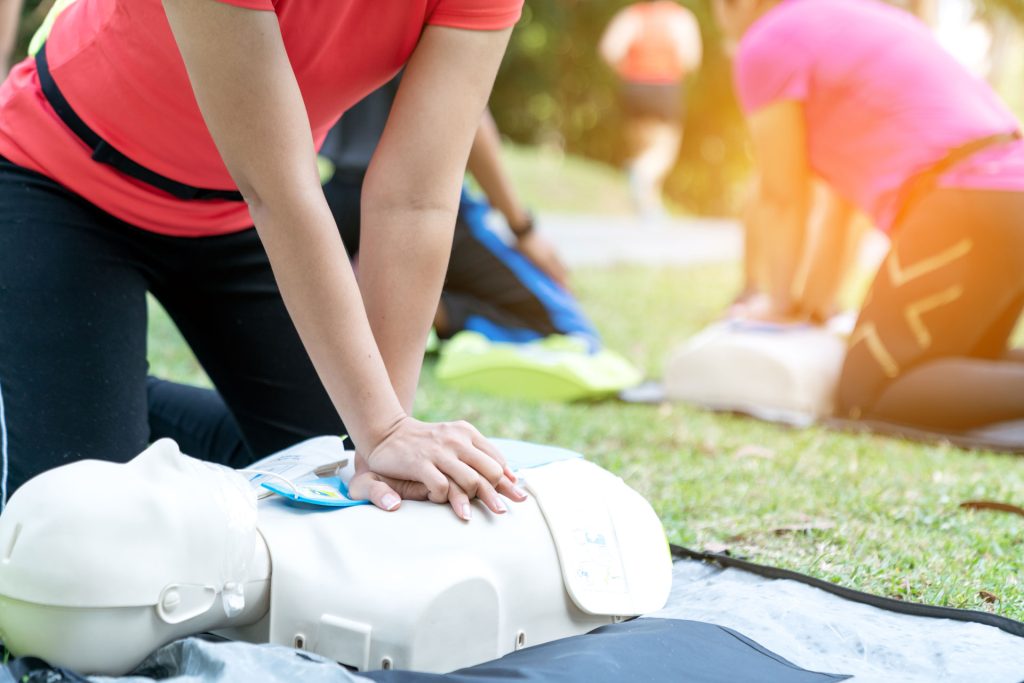
The secondly is mixed learning. Pre course online components cover background theory: chain of survival, standard anatomy, legal elements, and acknowledgment of illness. The in person session becomes virtually completely hands-on practice. This is where numerous express first aid courses and express cpr training programs actually shine.
The 3rd is strong instructor experience. A trainer with a history in emergency situation care or real child care settings can press content wisely. They understand which information really assist under stress and which can be securely transferred to pre reading or left out.
The 4th is evaluation that really evaluates your abilities. Even in an express first aid course, you must expect to demonstrate CPR, choking monitoring, and a couple of situation responses, not simply tick boxes on an on the internet quiz.
Fast certification works, yet just if it shows actual ability. Do not hesitate to walk away from service providers who make it feel like a formality.
Who advantages most from an express child care first aid course
Time efficient training is particularly helpful for:
- Early years teachers and child care workers whose rosters make prolonged courses tough Nannies, au pairs, and babysitters in between positionings or working irregular hours Parents or foster carers that need useful first aid and cpr, not corporate health and safety concept Sports trains and activity leaders that work primarily with youngsters and teens
For full-time childcare team, your regulatory authority or regional authority might need a particular kind or period of paediatric first aid course. An express childcare first aid course can still meet those requirements if it is certified and structured correctly. Constantly examine that the express first aid course or express childcare first aid training you select lines up with your regional regulations.
For parents and casual carers, there is usually extra flexibility. A shorter express cpr course incorporated with first aid for choking, burns, and head injuries can be sufficient to change your confidence at home.
What a regular express child care first aid training day looks like
Timetables differ, but below is how a well made express child care first aid course could stream when provided in one extensive day.
Morning commonly starts with a brief wrap-up of the on the internet components you are anticipated to have finished, complied with by prompt practice of CPR for babies and kids. Individuals cycle with compressions, rescue breaths, and AED use, switching functions as rescuer, viewer, and "parent" to practice communication.
Late morning usually shifts to choking and airway emergencies, with repeated technique on training torsos and youngster sized manikins. Trainers build short circumstances so you are not simply adhering to a manuscript: a child in a highchair, a kid on the floor, an older youngster standing and panicking.
After lunch, the emphasis usually relocates to blood loss, cracks, and head injuries. You exercise wrapping, supporting arm or legs, and doing a quick evaluation to look for warnings. The pace is quick, however a great trainer will certainly pause to highlight refined factors, like looking for unequal pupils or observing a child's behavior over time.
Later in the mid-day, burns, allergies, bronchial asthma, and seizures are normally covered. Below, the emphasis remains on recognition and prompt first aid, plus clearness concerning when to rise and exactly how to interact with emergency services and parents.
The day commonly finishes with situation evaluations. Tiny teams are provided a substitute childcare emergency and have to respond as if it were real, after that debrief with the instructor. This is where the training comes to life. Individuals know what they keep in mind, what they forget, and how they respond emotionally.
For those that choose not to invest a full day on website, some training centres supply express first aid and cpr courses where you total, as an example, 3 to 4 hours of online pre knowing, then go to a half day of extensive useful training. The total understanding time remains comparable to a traditional course, yet the "away from job" time is shorter.
Choosing the ideal express first aid course or provider
Not every fast first aid course classified as "express" appropriates for childcare. When you contrast express first aid courses, make use of an easy checklist to stay focused on what matters.
Check accreditation. Is the course identified by a trusted national body or straightened with regional childcare laws? If your role requires a specific paediatric or child care first aid certificate, confirm that this express version qualifies.
Examine the material synopsis. Look especially for "baby and kid CPR", choking, anaphylaxis, bronchial asthma, burns, head injuries, and seizures. If a course declares to be for child care however barely points out these, deal with that as a caution sign.
Ask regarding method time. The number of hours are spent doing hands-on cpr training, choking drills, and situations? A fast first aid training session that is mostly lecture will not develop reliable skills.
Look into instructor background. Fitness instructors with experience in emergency care or real child care settings typically bring more clear, extra useful mentor. It is worth asking.
Understand revival and refresher options. Good suppliers offer fast cpr correspondence course alternatives and brief express cpr training updates, which make it very easy to maintain current.
If you are searching online for a "fast first aid course near me", do pass by totally on cost or the shortest promoted period. Those are appealing shortcuts that can leave you underprepared when it matters.
Keeping skills to life after your first aid certificate
A first aid certificate confirms that you satisfied a criterion on a specific day. It does not ensure you will certainly keep in mind every step a year later on, particularly if you never utilize the abilities in actual life.
From years of viewing exactly how people preserve first aid and CPR, three routines make a recognizable difference.
Regular micro refresher courses assist. Lots of training providers now run short, focused sessions such as express cpr courses or 1 to 2 hour fast cpr refresher course options. Also going to one fast method every 6 to one year can keep your muscle memory sharp.
Scenario conversations at the workplace are underrated. In childcare teams, take 10 minutes during a staff conference to walk through a "what happens if" case: a kid breaks down on the play ground, a baby quits breathing during a snooze check, or a severe allergic reaction during snack time. Review that does what, where tools is stored, and exactly how you would call for assistance. This sort of wedding rehearsal, even without manikins, seals your first aid training in an actual context.
Personal representation after genuine occurrences is awkward however effective. Any time you deal with an injury or illness, ask on your own afterwards: What worked out? What really felt complicated? Did we postpone any choices? Make use of those answers to lead your option of following express first aid training or first aid and cpr training classes.
Fitting first aid into busy child care environments
Everyone in child care is under source pressure. Proportions are limited, documentation is hefty, and moms and dads expect quick actions. That reality is what makes express childcare first aid courses so valuable, yet it likewise introduces practical constraints.
Managers typically ask if they can send out only a handful of staff for first aid and cpr courses. Regulative bodies usually call for specific minimum coverage, for example at least one accordingly trained individual on site in any way times, or one on each floor or area. Beyond the legal minimum, real strength comes when numerous individuals are confident. During a dilemma you rarely desire just a single person capable of CPR.
In method, several centres rotate team via fast first aid courses in little teams, combining them with express first aid training updates in later years. This spreads out cost and lack while slowly developing a fully trained team.

For online carers or parents, the obstacle is usually childcare itself. Some suppliers use night or weekend express cpr training sessions, or allow infants to go to with a second carer. It deserves asking. I have run many tiny team sessions in living spaces for a few households with each other, which gets rid of the childcare issue entirely.
When a short course is not enough
There are circumstances where a really fast first aid course merely is not ideal on its own.
If you are the designated first aider in a large childcare centre, you may need a complete length paediatric first aid course along with any express refreshers. Governing structures often define minimum course hours or material blocks that express formats have to still meet.
If you collaborate with children who have complicated clinical requirements, such as tracheostomies, ventilators, or serious epilepsy, you will also need specialist training beyond basic first aid and cpr. Express first aid courses supply the structure, but they can not cover every advanced skill safely in a short window.
Some suppliers use modular understanding in these situations: a strong express childcare first aid course as the base, adhered to by brief add ons for specific conditions pertinent to your setting. That structure makes far better use of everybody's time while still appreciating the intricacy of the care.
The actual value of express child care initial aid
When individuals discuss first aid training, they usually focus on certifications, compliance, or course size. In child care, the actual value sits someplace much more human.
It is the teacher who can kneel close to a choking kid, remember the steps, and act before panic takes over. It is the parent that recognizes how to begin CPR while an additional calls an ambulance. It is the sports instructor that finds that a loss is greater than "simply a bump" and demands clinical review.
A well made express child care first aid course does not waste words. It concentrates your attention on those vital few actions that shield a youngster's mind, airway, breathing, and blood circulation in the first mins. It strips away made complex lingo so you can remember what to do when your hands are shaking.
Fast first aid training does not make emergency situations less frightening. It makes you beneficial inside the fear. And for a kid in problem, that can imply everything.